Architectural Observations

Notes on the Virginia Tech campus in Blacksburg

Tag: architecture

  • Local Stone

    Local Stone

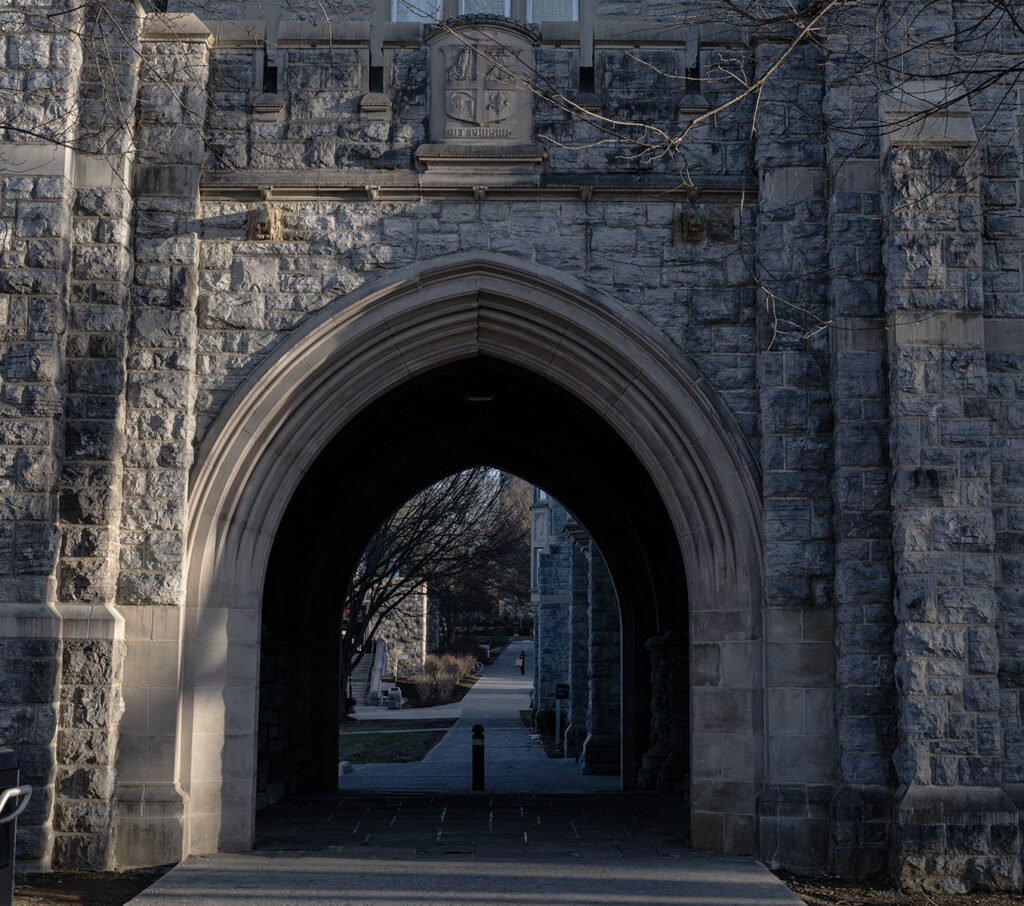
    Virginia Tech was founded in 1872 to teach farming and mechanics to young men. In the isolated Appalachian town of Blacksburg, Virginia, the early institution was a self-sufficient community that relied on its own resources for nearly everything. The dormitory Lane Hall was built in 1888 with locally made bricks. The early stone buildings, from 1899 to 1924, were built with dolomite limestone quarried on the campus.
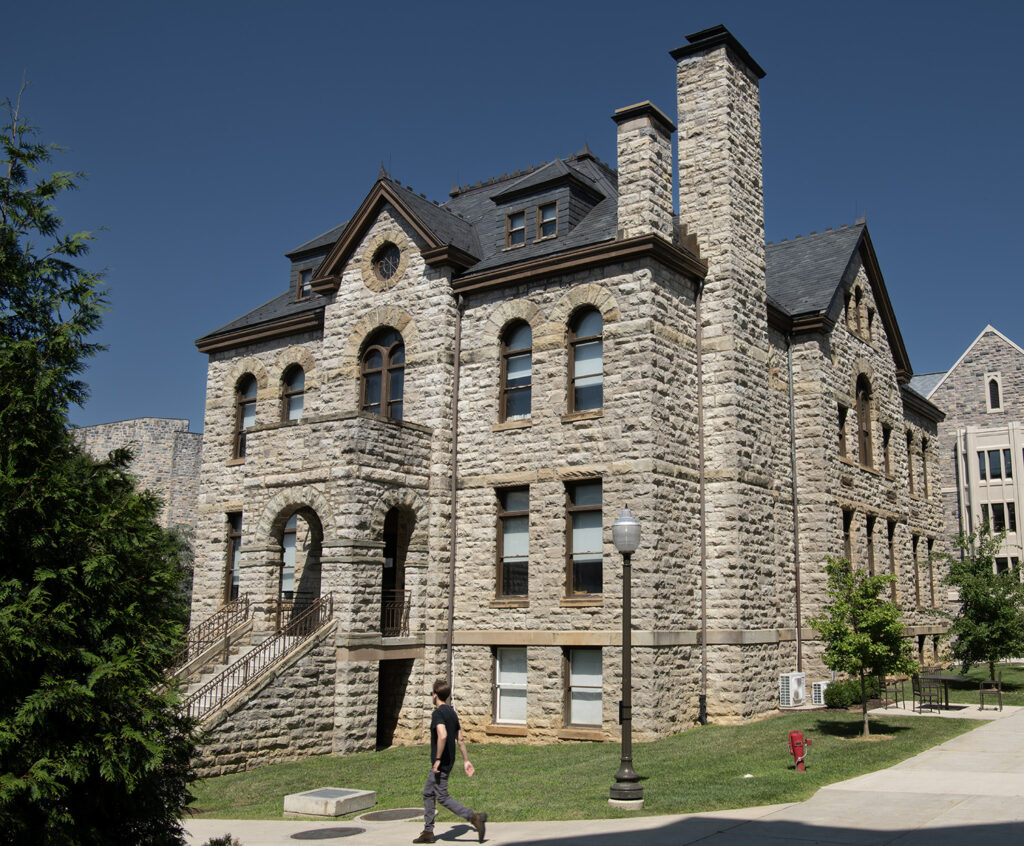

    The first Hokie Stone building. , YMCA, now Liberal Arts and Human Sciences. Built from 1899 to 1901, the YMCA was the first major building constructed with stone.
    A wall constructed with rough limestone blocks.
    Detail of masonry on the YMCA building. The stone was quaried on campus.

    Stone was sometimes used for necessity when bricks were difficult to obtain in quantity, but it was also seen as an expression of academic prestige. Quarried from the soil underfoot, the local stone was soon a hallmark of the school’s identity.

    When the campus quarry ceased operations in the mid-1920s, other local quarries provided stone for buildings. Hokie Stone, as the Virginia Tech community calls it, now comes from a quarry in Blacksburg owned by the Virginia Tech Foundation. The strength of the identity is such that stone from Blacksburg was delivered to Alexandria, Virginia, for Academic Building One of the Virginia Tech Innovation Campus, near Washington, D.C..

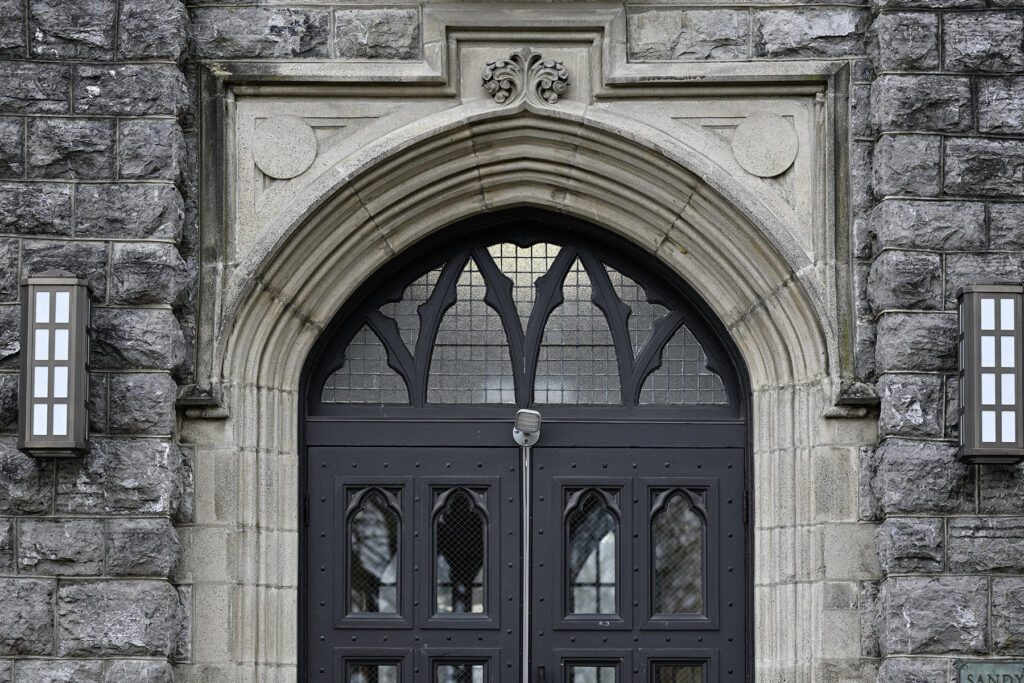
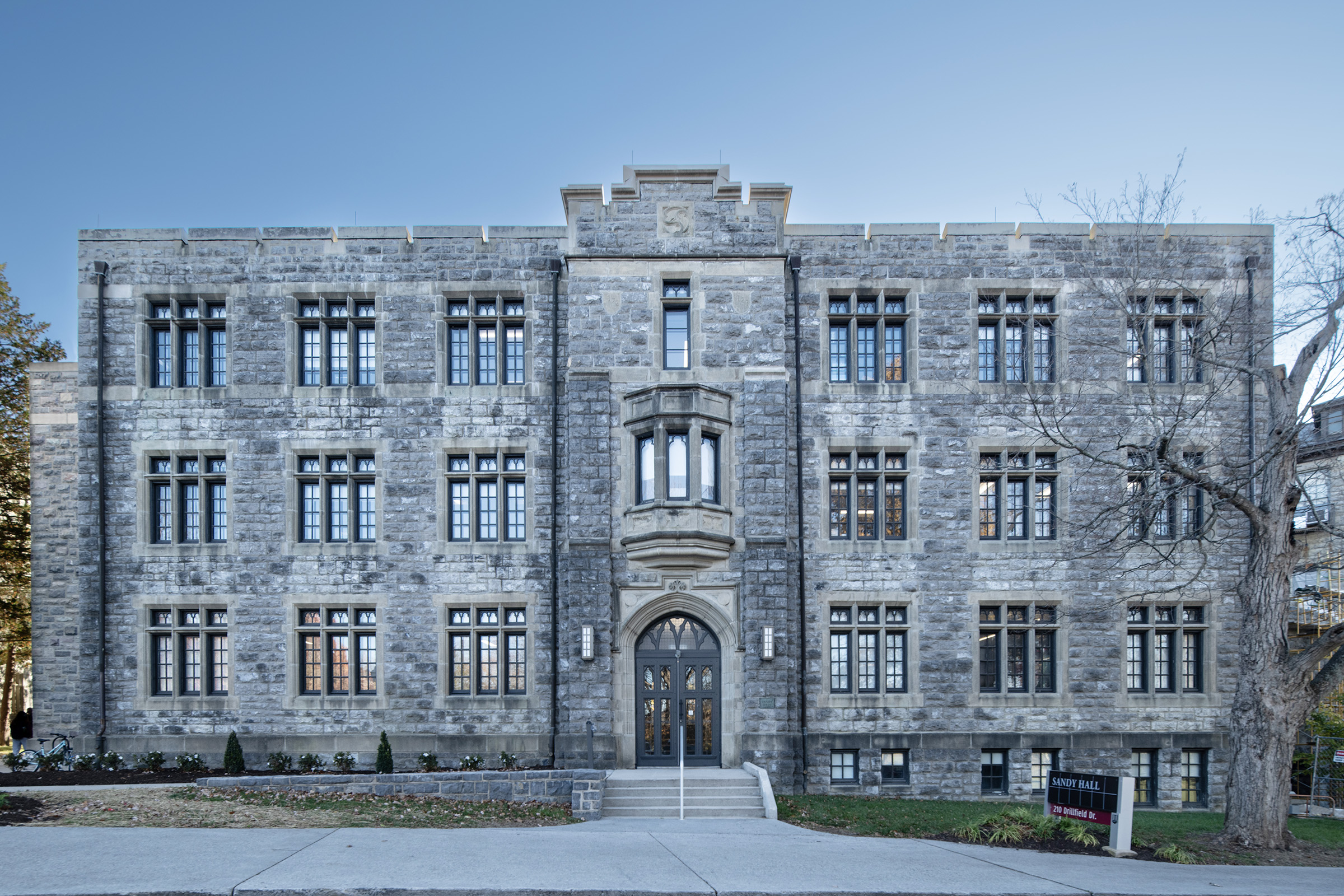
    Top photo: Sandy Hall was built from 1923 to 1924 with stone from the quarry on the campus, which was in the hillside behind the present-day Cowgill Hall.
  • Tudor Style

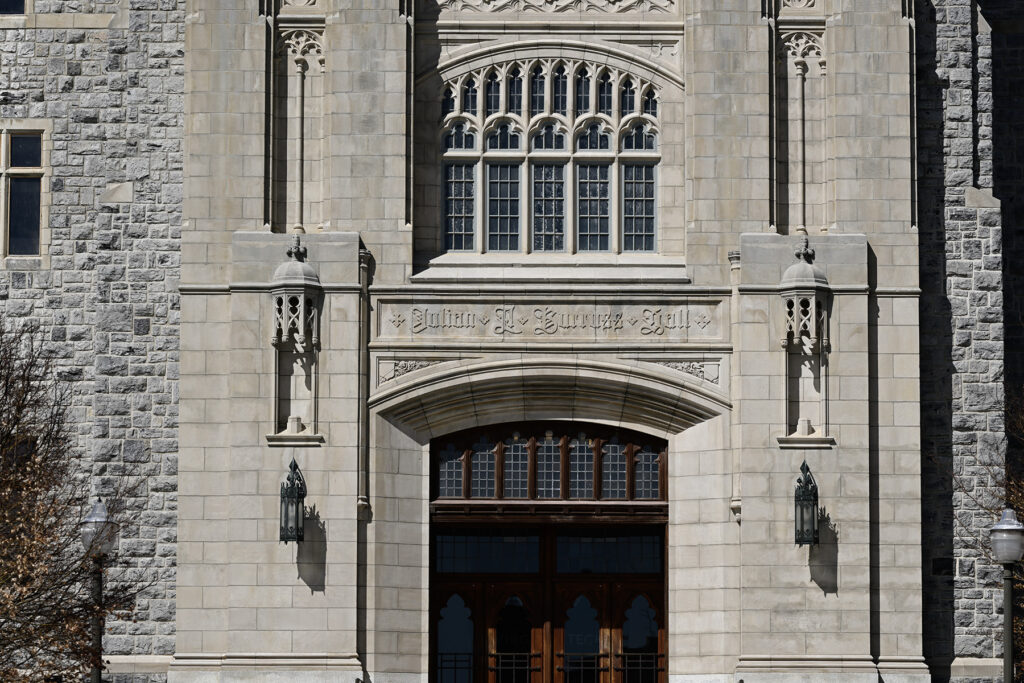
    Virginia Tech president Julian A. Burruss wanted Tudor architecture for the stone buildings around the Drillfield. Tudor is a late British Gothic style that developed under the Tudor monarchs, who reigned from 1485 to 1603. A characteristic of the style is the Tudor arch, which is a flattened or compressed arch, composed of two arcs on each side with radii of different lengths. A relatively tight arc at the base eases into a broader arc with a longer radius.

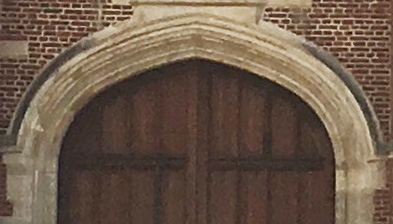
    Arch of the Hampton Court Palace clock tower.

    Earlier Gothic arches are steeper, with a single arc on each side and a distinct point at the apex, like a lancet, as often seen on American churches.

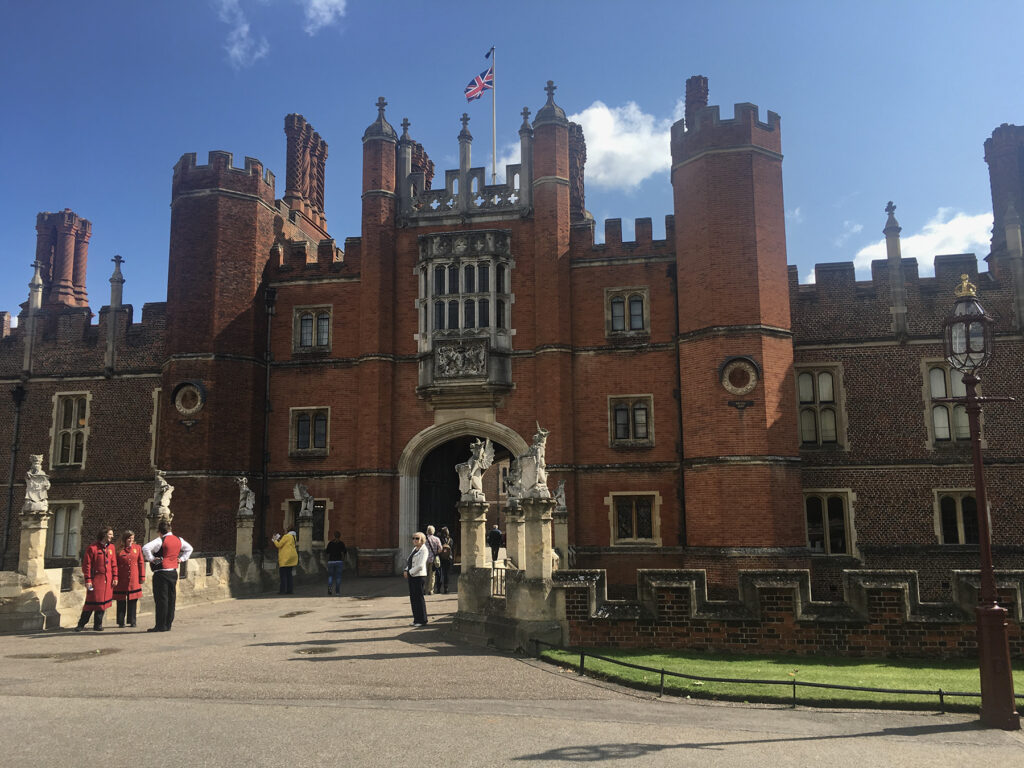
    Tudor arch over the main gate house of Hampton Court Palace of Henry VIII.

    The Hampton Court Palace of Henry VIII on the Thames River is an exemplar of the Tudor style.

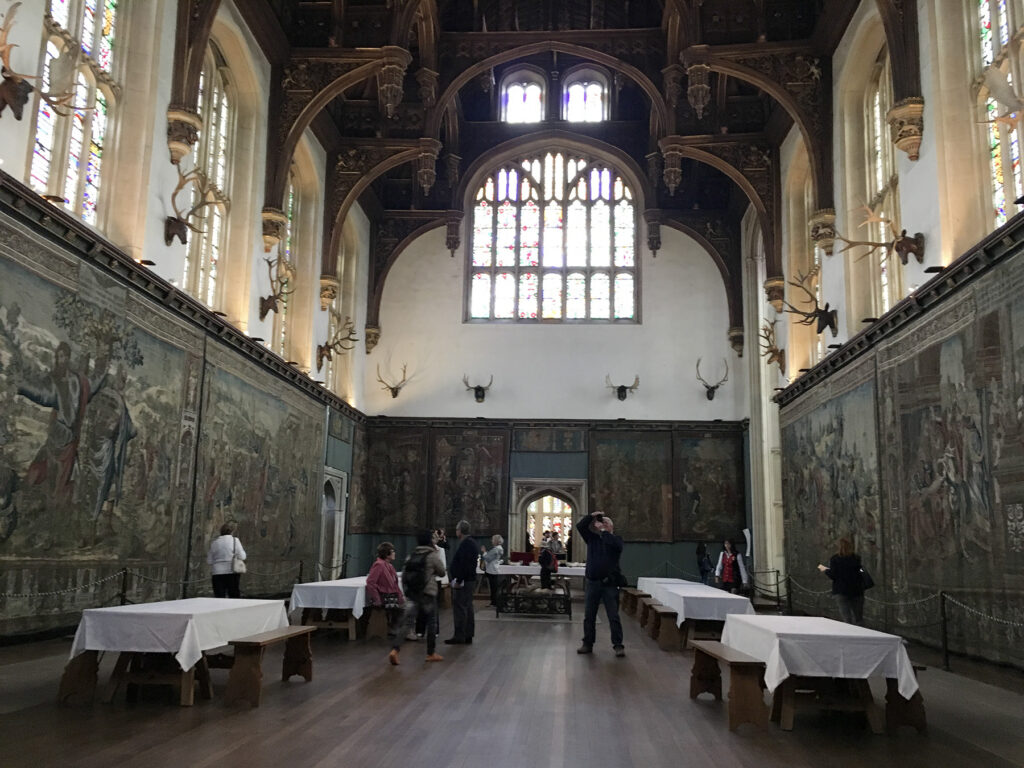
    Hampton Court Palace Great Hall.
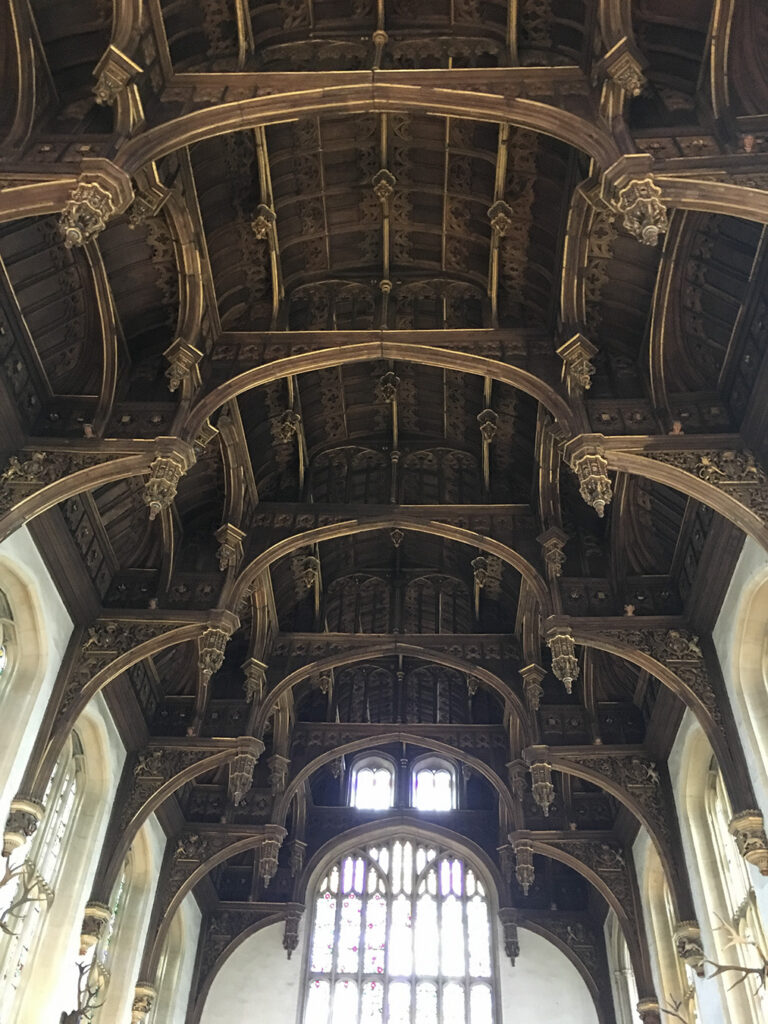
    Ceiling of the Hampton Court Palace Great Hall.

    Tudor was the inspiration for the Collegiate Gothic style adopted by many American colleges and universities in the late 19th and early 20th centuries. Collegiate Gothic loosely emulated the Tudor era of Oxford and Cambridge Universities, which followed royal trends.

    At Virginia Tech, any form of compressed arch sufficed to evoke the Tudor style.

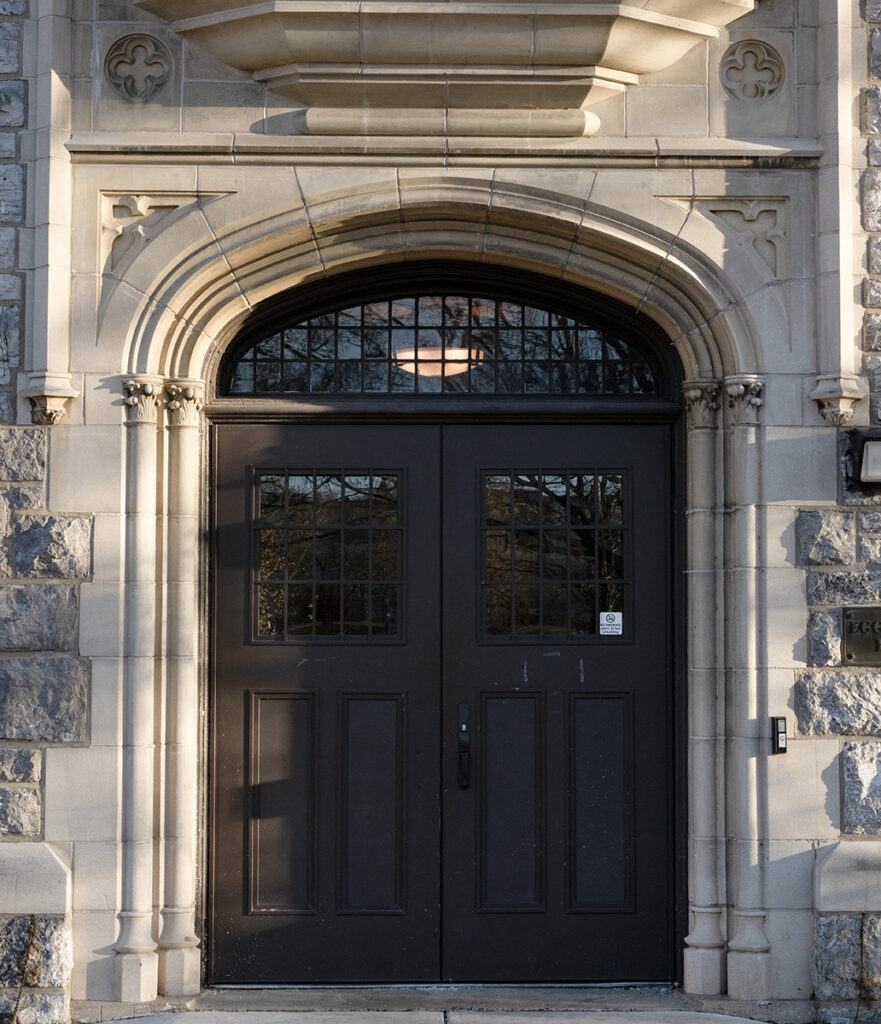
    Sandy Hall, completed in 1924, is the oldest Virginia Tech building with a Tudor arch. A tighter arc at the base merges with a broader arc. At the apex, a decorative point flows into a floral motif.
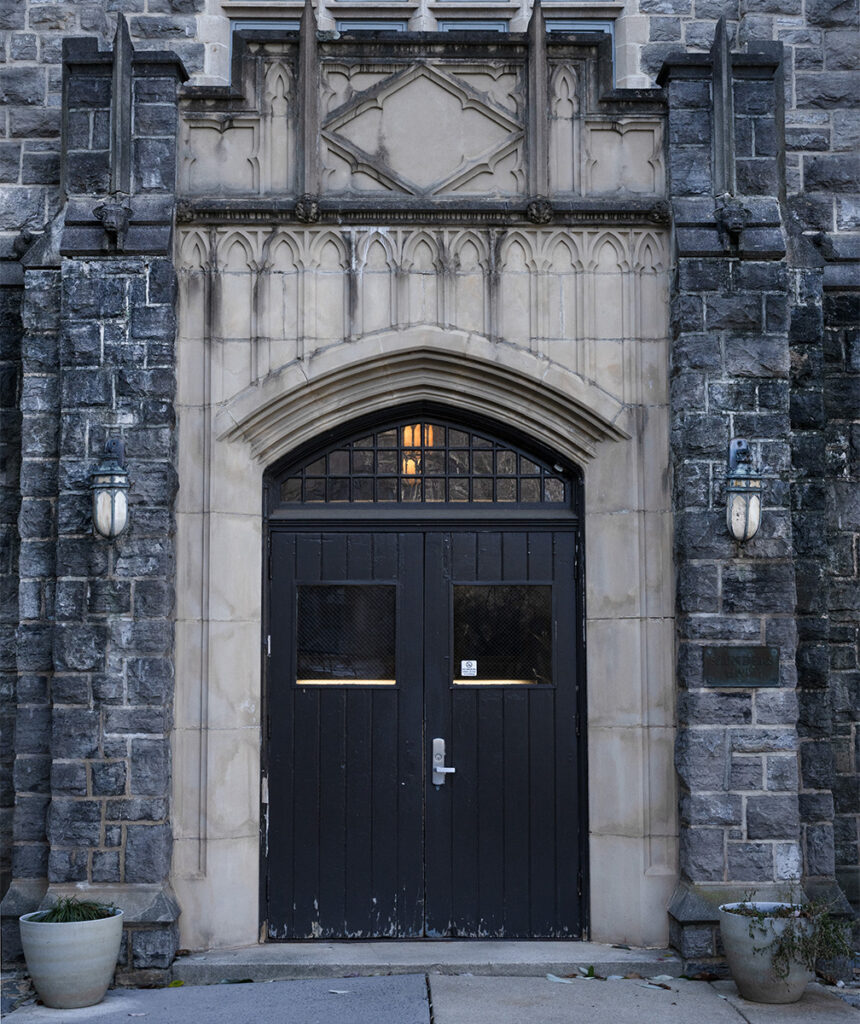
    Saunders Hall, 1931, has a compressed arch with a single arc on each side.
    Main Eggleston Hall, completed in 1935. An entrance has an arch similar to those of Hampton Court Palace, with a subtle apex.
    Burruss Hall, completed in 1936, has a simple arc, which is the most common compressed arch at Virginia Tech.
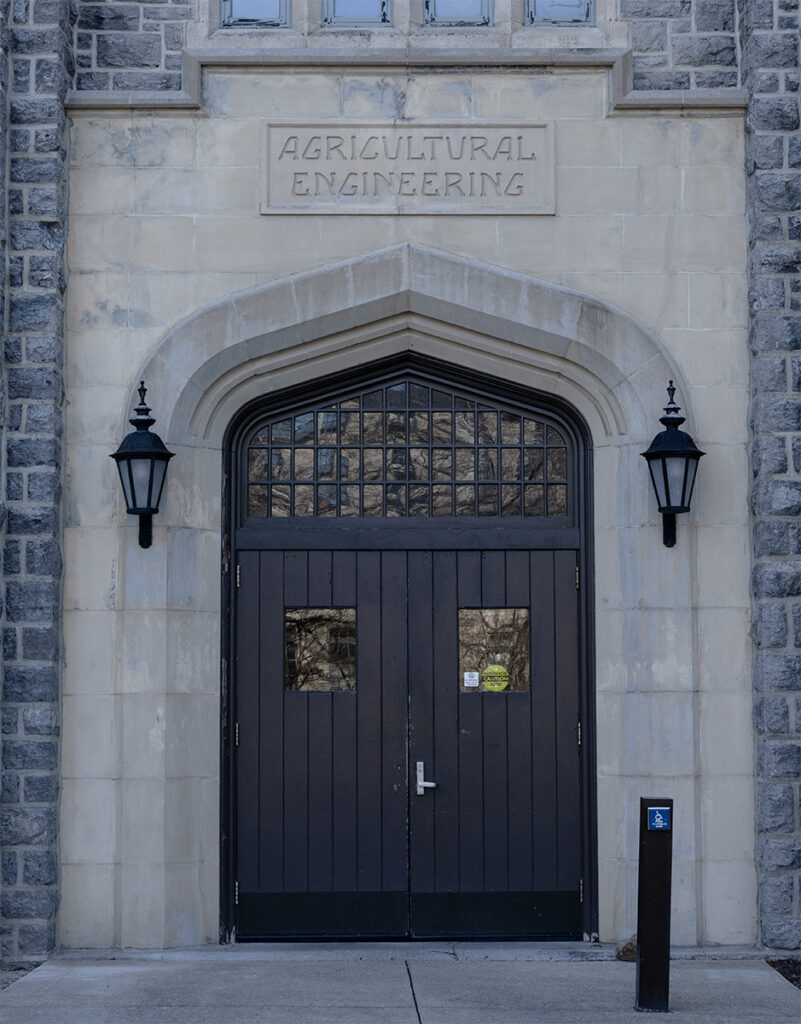
    Seitz Hall, completed 1940. Main entrance with a Tudor arch. An arc at the base merges into a straight line.
    West Eggleston Hall, completed in 1940. A Gothic lancet arch with a single arc on each side rising steeply to a point at the apex.

    Text and photographs are by Steven Tatum.