
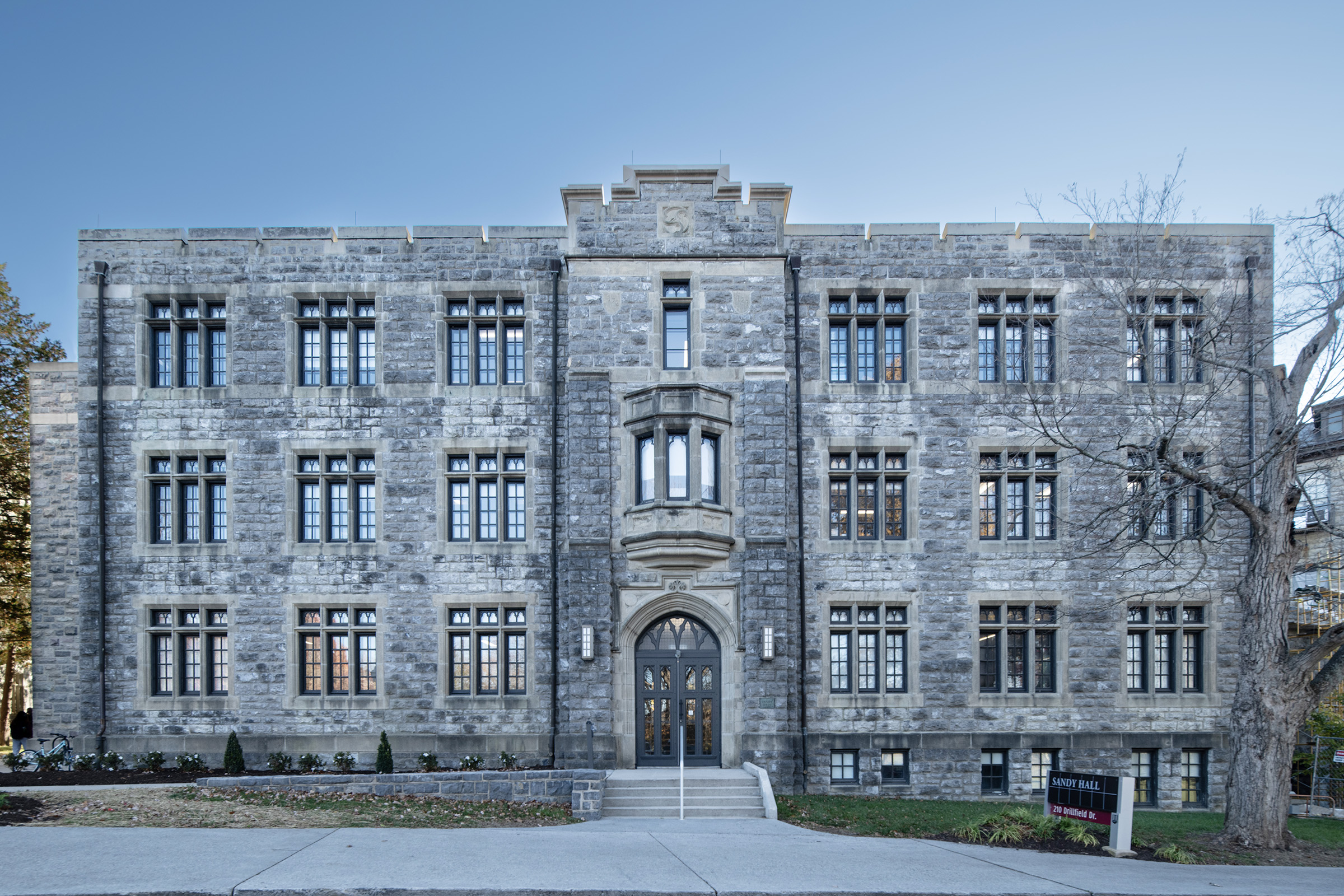
Virginia Tech was founded in 1872 to teach farming and mechanics to young men. In the isolated Appalachian town of Blacksburg, Virginia, the early institution was a self-sufficient community that relied on its own resources for nearly everything. The dormitory Lane Hall was built in 1888 with locally made bricks. The early stone buildings, from 1899 to 1924, were built with dolomite limestone quarried on the campus.
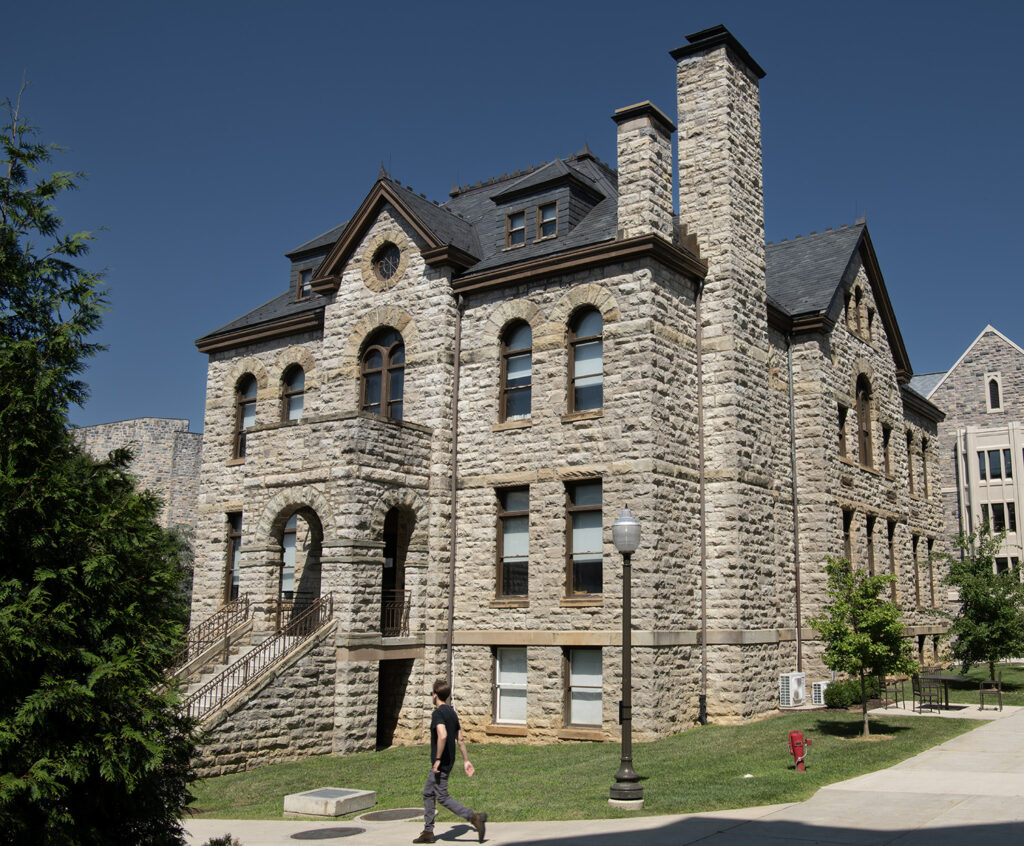
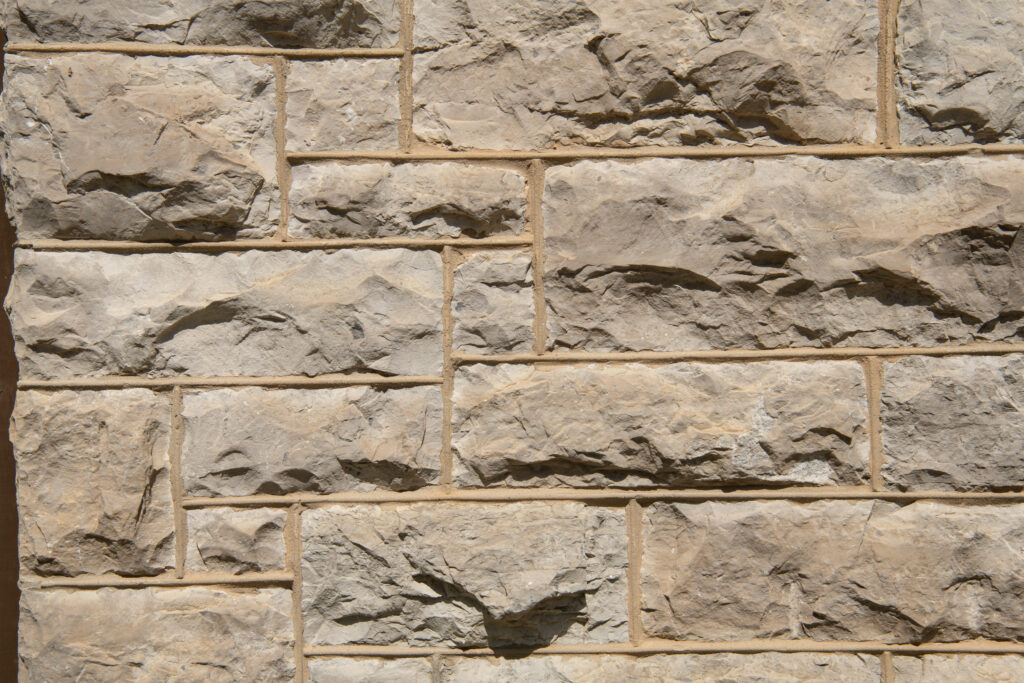
Stone was sometimes used for necessity when bricks were difficult to obtain in quantity, but it was also seen as an expression of academic prestige. Quarried from the soil underfoot, the local stone was soon a hallmark of the school’s identity.
When the campus quarry ceased operations in the mid-1920s, other local quarries provided stone for buildings. Hokie Stone, as the Virginia Tech community calls it, now comes from a quarry in Blacksburg owned by the Virginia Tech Foundation. The strength of the identity is such that stone from Blacksburg was delivered to Alexandria, Virginia, for Academic Building One of the Virginia Tech Innovation Campus, near Washington, D.C..
Top photo: Sandy Hall was built from 1923 to 1924 with stone from the quarry on the campus, which was in the hillside behind the present-day Cowgill Hall.